Ashim Dhor

Researcher

I am Ashim, a final-year BS-MS student in the Data Science and Engineering Department at Indian Institute of Science Education and Research - Bhopal (IISER-B). I am currently working on my Master's thesis in Data Science and Engineering under the supervision of Dr. Tanmay Basu, in collaboration with clinicians at Jawaharlal Nehru Cancer Hospital and Research Centre, Bhopal, and AIIMS Bhopal.

I'm deeply into building AI that actually thinks — not just predicts. My work lives at the intersection of computer vision, deep learning, and reasoning. I play around with Vision-Language Models (VLMs), Multimodal LLMs (MLLMs), and multi-agent systems where different AIs talk to each other, disagree, and figure things out together. Lately, I've been obsessed with making AI systems more reliable — teaching them to reason step-by-step, handle uncertainty, and know when to ask for help. I also love the fundamentals: topology-aware learning, contrastive learning, and squeezing the most out of deep neural nets. Whether it's building agents that collaborate or models that explain themselves, I'm here for the messy, interesting problems.

Outside of research, I love playing kabaddi and am always on the lookout for good food. Feel free to drop me a mail: ashimdhor2003@gmail.com!

Ashim Dhor

news

publications

2026

TUNE++
TUNE++: Topology-Guided Uncertainty Estimation for Reliable 3D Medical Image Segmentation
Ashim Dhor, Abhirup Banerjee, Tanmay Basu
Medical Imaging with Deep Learning (MIDL) 2026
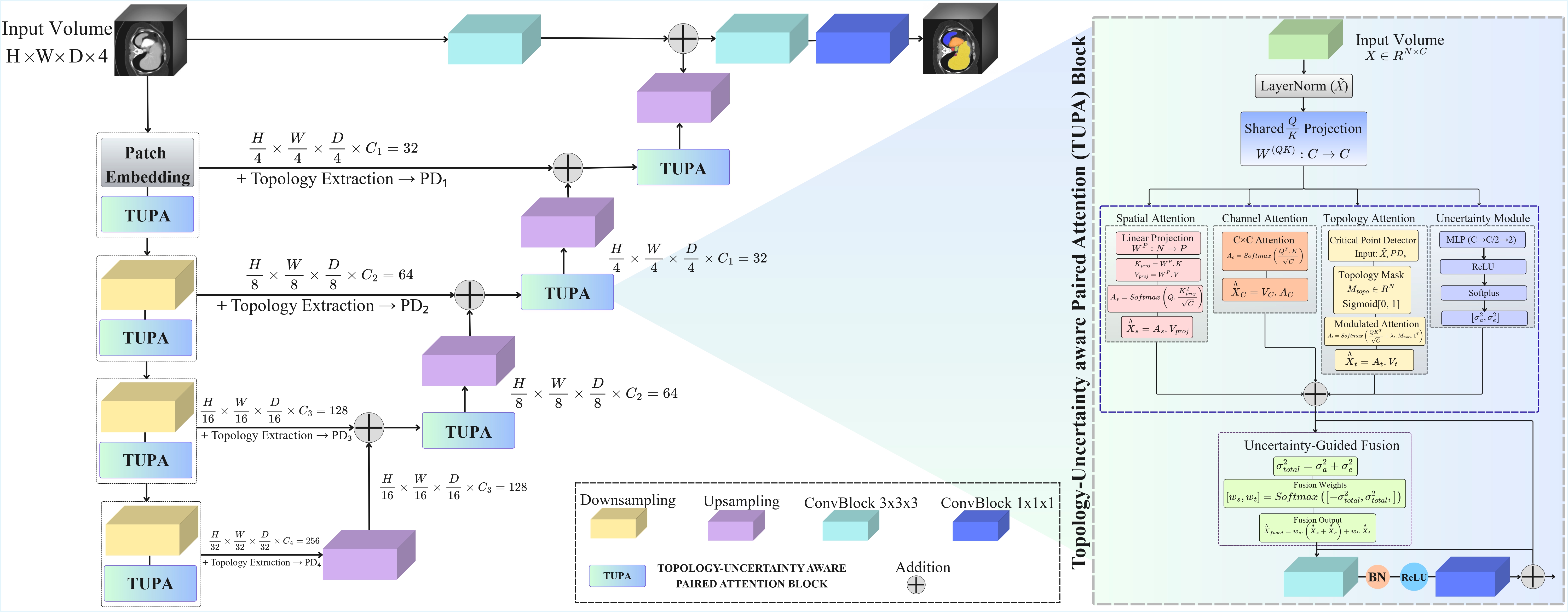
Deep learning models for medical image segmentation lack mechanisms to assess their own reliability, leading to two critical failures: they provide no uncertainty estimates to distinguish confident predictions from error-prone ones, and often produce anatomically implausible segmentations or incorrect connectivity that violate known structural constraints. We observe that uncertainty and topology are intrinsically linked and anatomically complex regions naturally exhibit higher prediction uncertainty, while uncertain predictions require stronger enforcement of structural constraints. Building on this insight, we propose TUNE++, a unified framework that jointly learns segmentation, uncertainty quantification, and topology preservation through a novel Topology-Uncertainty aware Paired Attention (TUPA) mechanism. Our method decomposes uncertainty into aleatoric and epistemic components while simultaneously enforcing anatomical correctness through persistent homology-based constraints. A key innovation is our topology-uncertainty alignment loss that minimizes the discrepancy between predicted total uncertainty and a topological complexity score computed from organ boundaries, multi-organ junction counts, and critical points extracted from persistence diagrams, teaching the model to be uncertain precisely where anatomical structure is geometrically complex. Our empirical results demonstrate that joint modeling of TUNE++ produced enhanced segmentation accuracy, well-calibrated uncertainty estimates that successfully identify errors, substantial reduction in topological violations, and learned confidence that correlates strongly with anatomical complexity.
HISTO-UNet
HISTO-UNet: Histopathology Image Segmentation Using Topology-Aware UNet with Dual Uncertainty Quantification
Ashim Dhor, Emily Das, Rasel Mondal, Sweta Azad, Vaishali Walke, Shakti Kumar Yadav, Abhirup Banerjee, Tanmay Basu
IEEE International Symposium on Biomedical Imaging (ISBI) 2026
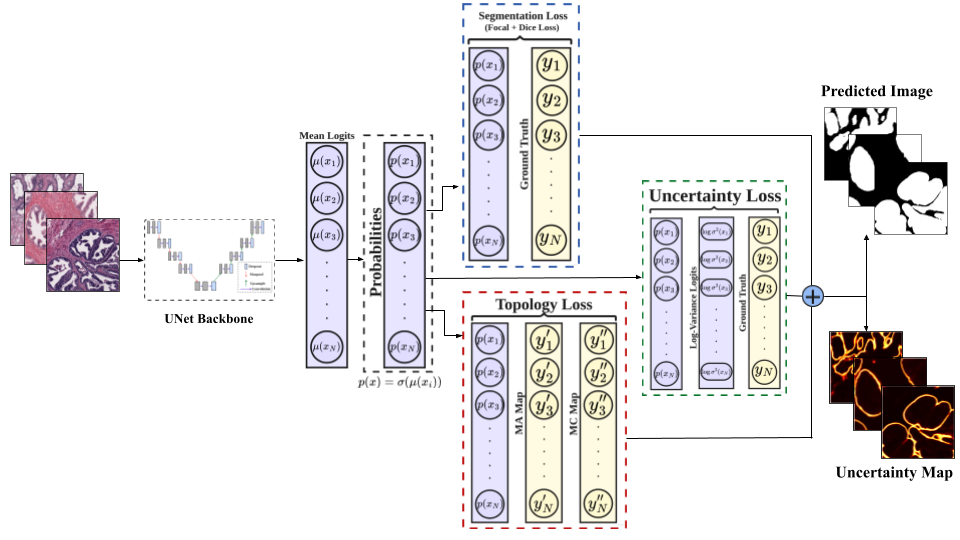
Histopathology image segmentation requires not only accurate pixel-wise predictions but also the preservation of topological structures and the quantification of prediction uncertainty for better diagnostics. We present HISTO-UNet, a novel framework that addresses these challenges by integrating topology-preserving constraints with a dual uncertainty quantification system for robust histopathology image segmentation. Our approach employs a multi-task objective, combining medial axis and marker-controlled topology losses with a Bayesian deep learning methodology to simultaneously capture both aleatoric and epistemic uncertainty. Through extensive evaluation on three public datasets, we found HISTO-UNet consistently outperforms standard baselines in both segmentation accuracy and uncertainty calibration. Our experiments validate the contribution of each component, revealing that the integration of topology-awareness and dual uncertainty quantification yields significant improvements in both segmentation performance and model reliability.
Topo-GraT
Topo-GraT: Learning to Grow with Causal Graph Transformers
Ashim Dhor, Smily Bharadwaj
AAAI 2026 — Student Abstract Track
Automated cancer segmentation in Whole Slide Images (WSIs) has been dominated by a paradigm of static pattern recognition, where even advanced methods leveraging Transformers, Multiple Instance Learning, or topology-aware losses remain fundamentally descriptive and correlational. To address this limitation, we reframe WSI segmentation from a descriptive task to one of causal process modeling. We introduce Topo-GraT, a novel framework featuring a Causal Growth Field (CGF) to model tumor invasion dynamics and a Causal Flow Attention (CFA) mechanism that embeds this field as an architectural prior. This causal engine is integrated within an iterative graph refinement loop that uses segmentation uncertainty to dynamically focus computational resources on the most ambiguous tissue regions. Our comprehensive experiments on multiple WSI datasets demonstrate that Topo-GraT establishes a new state-of-the-art, significantly outperforming existing methods and reducing the 95% Hausdorff Distance, a key boundary metric, by over 15%. Crucially, our framework yields the CGF as a rich, interpretable output whose structure correlates with tumor aggressiveness, positioning it as a novel biomarker for downstream prognostic tasks.
Gland Segmentation
An Uncertainty-Aware Deep Learning Model for Gland Segmentation in Prostate Histopathology Images
Ashim Dhor, Emily Das
AAAI 2026 — Empowering Global South AI Community Activity
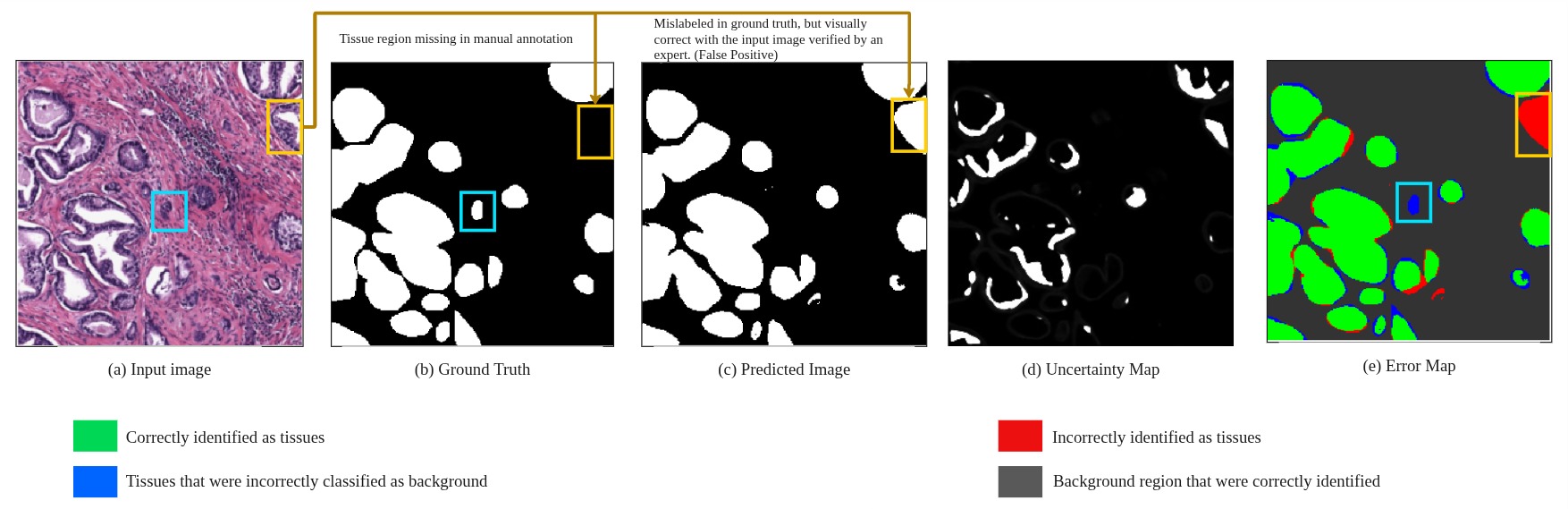
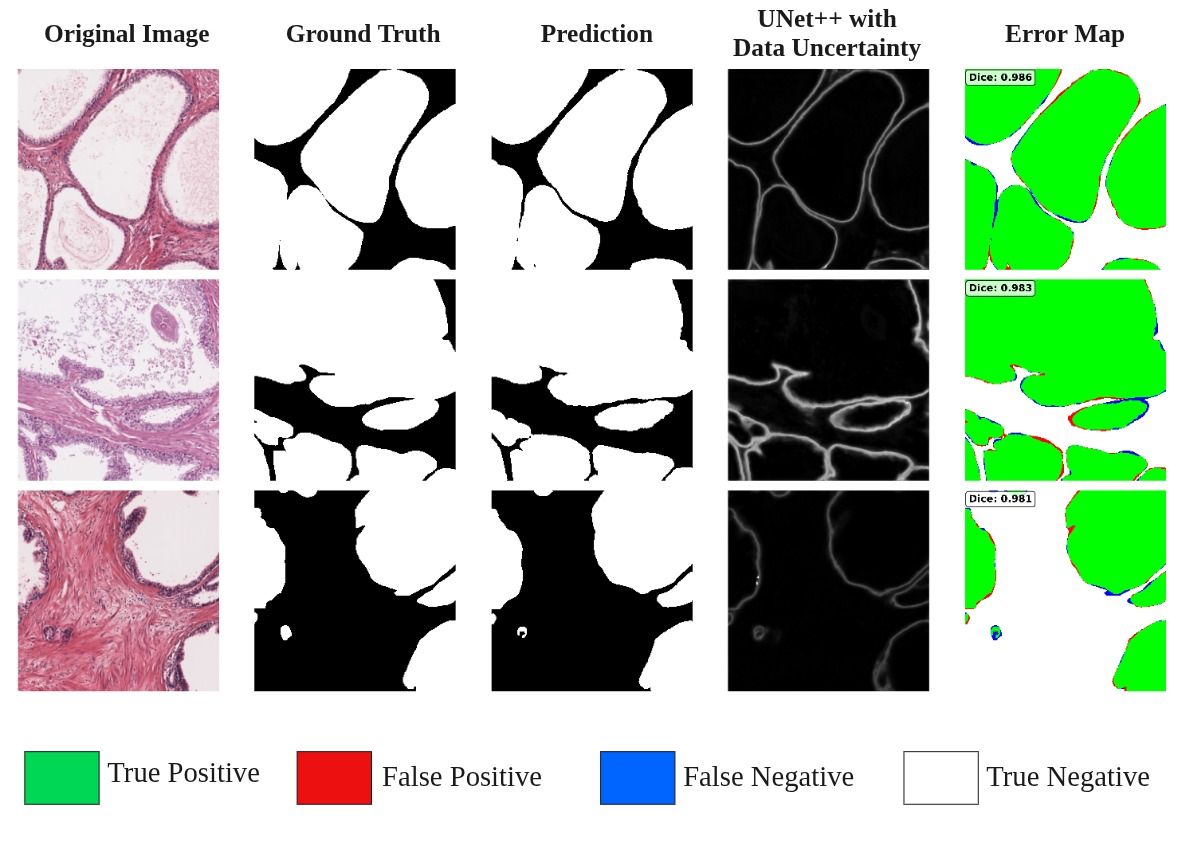
Deep learning models for histopathology gland segmentation achieve high accuracy but lack confidence estimates, leading to silent failures in ambiguous regions and limited clinical trust. We propose an uncertainty-aware UNet++ framework that performs accurate gland segmentation and generates pixel-wise uncertainty maps to identify challenging regions. The framework explicitly models aleatoric uncertainty through Gaussian noise injection in logit space, combining cross-entropy, Dice, and uncertainty loss functions to optimize both segmentation accuracy and calibrated uncertainty estimation. Our framework achieves superior performance and low ECE, outperforming baseline models and existing uncertainty-aware methods including PHiSeg. This work provides a practical foundation for trustworthy AI in clinical pathology by offering transparent, confidence-calibrated predictions that help pathologists assess reliability and flag annotation issues.

2024

QGNN Fraud Detection
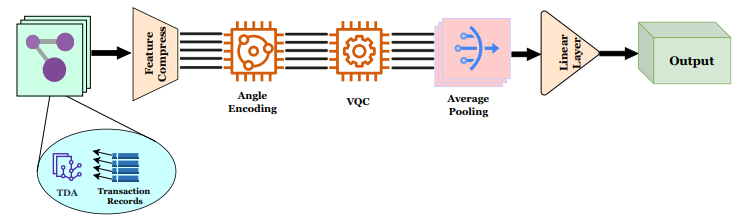
Financial Fraud Detection Using Quantum Graph Neural Networks
N. Innan, A. Sawaika, A. Dhor, S. Dutta, S. Thota, H. Gokal, N. Patel, M. A. Khan, I. Theodonis, M. Bennai
Quantum Machine Intelligence, 2024
Financial fraud detection is essential for preventing significant financial losses and maintaining the reputation of financial institutions. In this paper, we propose a novel approach for detecting financial fraud using Quantum Graph Neural Networks (QGNNs). QGNNs are a type of neural network that can process graph-structured data and leverage the power of Quantum Computing to perform computations more efficiently than classical neural networks. Our approach uses Variational Quantum Circuits (VQC) to enhance the performance of the QGNN. The results of our experiments showed that QGNNs achieved an AUC of 0.85, which outperformed classical GNNs. Our research highlights the potential of QGNNs and suggests that QGNNs are a promising new approach for improving financial fraud detection.

work in progress

WSI Dataset
Large-Scale Whole Slide Image Dataset for Head & Neck and Multi-Organ Cancer
Ashim Dhor, Tanmay Basu, and clinical collaborators
In collaboration with AIIMS Bhopal & JNCHRC Bhopal
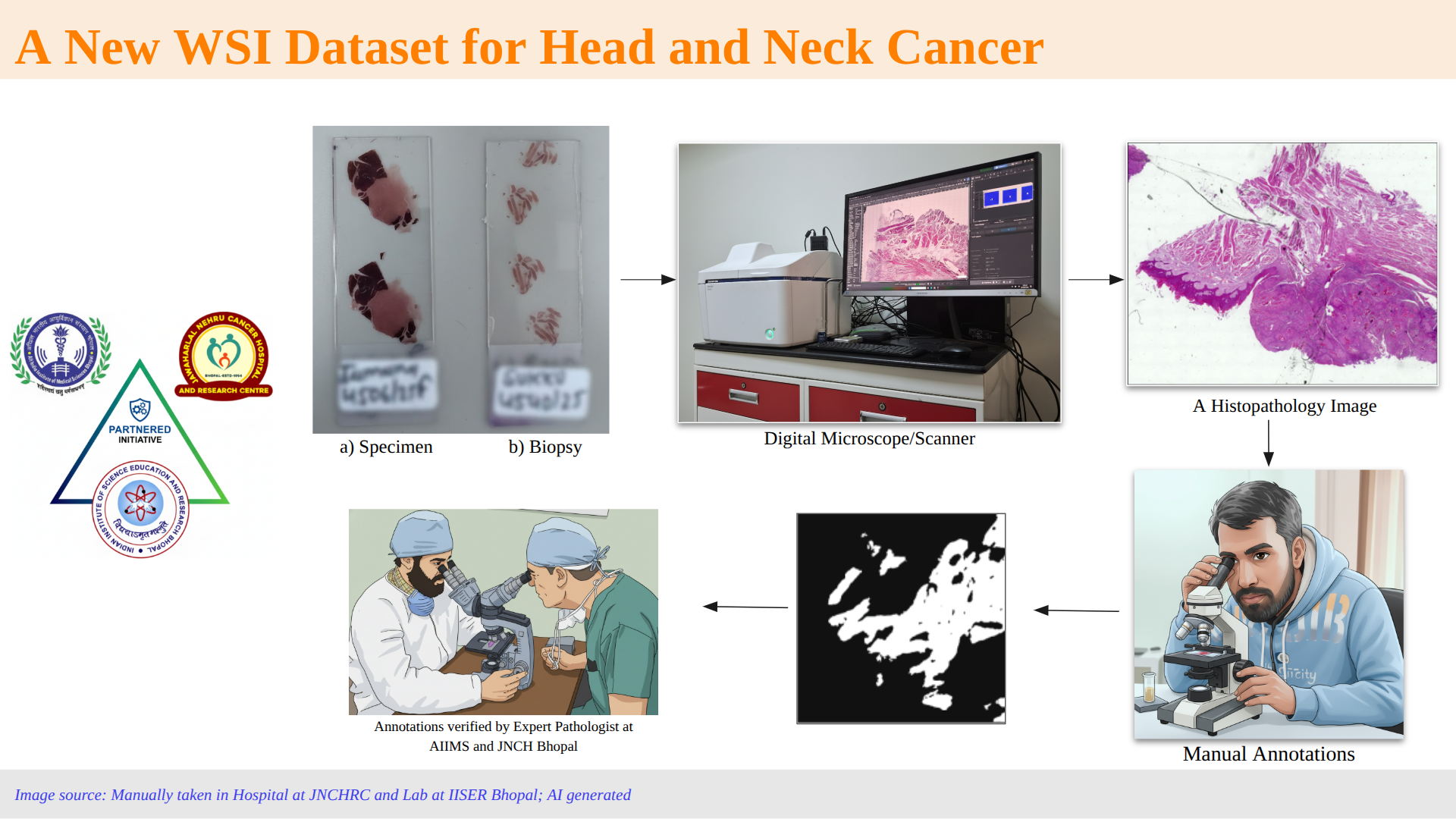
Building a large-scale, clinician-annotated dataset of whole slide images (WSIs) for cancer research. The primary focus is on Head & Neck cancers — including squamous cell carcinoma, adenoid cystic carcinoma, mucoepidermoid carcinoma, and verrucous carcinoma — with ongoing expansion to Breast cancer, Lung cancer (adenocarcinoma & squamous cell), Ovarian cancer, Prostate cancer, and Liver cancer (hepatocellular carcinoma). The dataset is being developed in close collaboration with pathologists at AIIMS Bhopal and Jawaharlal Nehru Cancer Hospital & Research Centre to ensure high-quality annotations with clinical-grade ground truth.
CONSULT
Collaborative Multi-Agent Reasoning for Whole-Slide Histopathology Analysis
Ashim Dhor, et al.
Manuscript in preparation
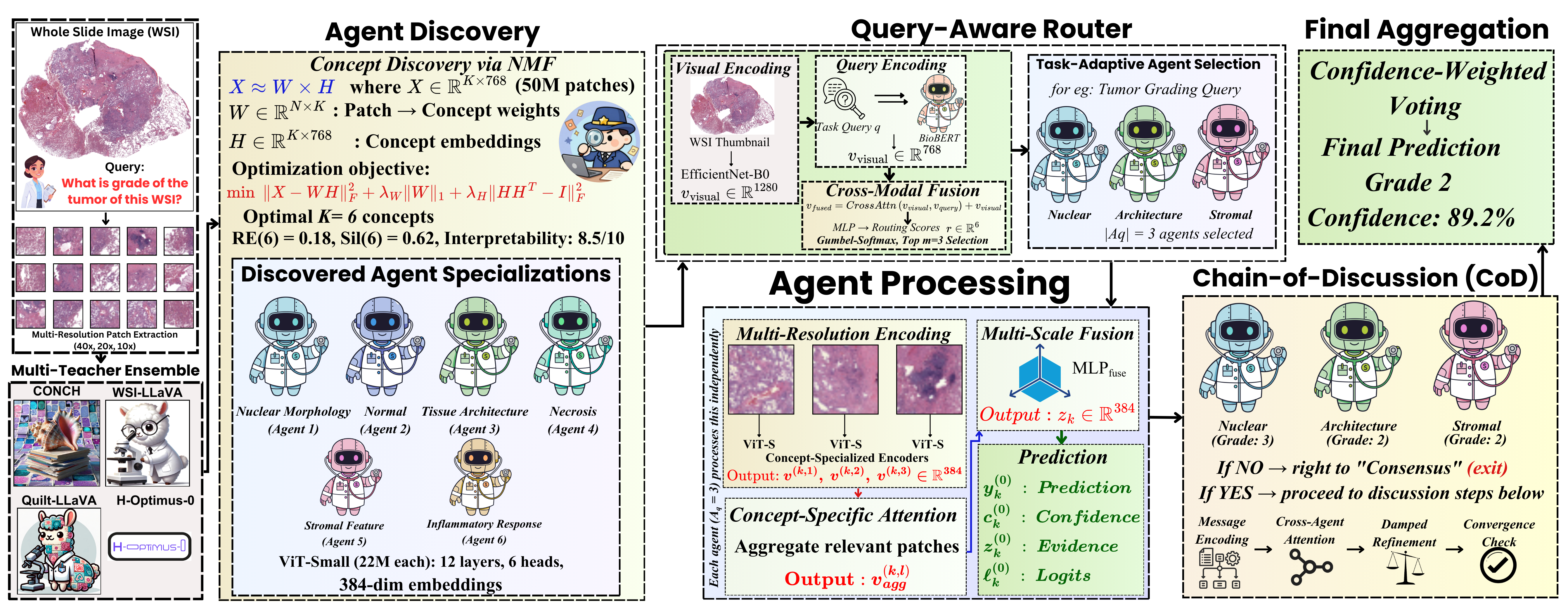
Developing a concept-specialized multi-agent framework for whole-slide histopathology that moves beyond monolithic foundation models. We apply non-negative matrix factorization on a multi-teacher ensemble to discover six interpretable morphological specializations — nuclear features, tissue architecture, stromal patterns, inflammatory response, necrosis, and normal tissue — and distill them into lightweight student agents. A learned query-aware router dynamically activates task-relevant agents per case, and selected agents engage in a Chain-of-Discussion protocol, iteratively exchanging structured evidence, refining predictions through attention-weighted integration, and explicitly flagging uncertainty when consensus cannot be reached — mirroring how pathologists deliberate on challenging cases.
MEDHA
Deliberative Multi-Agent Framework for Hypothesis-Driven Cancer Diagnosis
Ashim Dhor, et al.
Manuscript in preparation
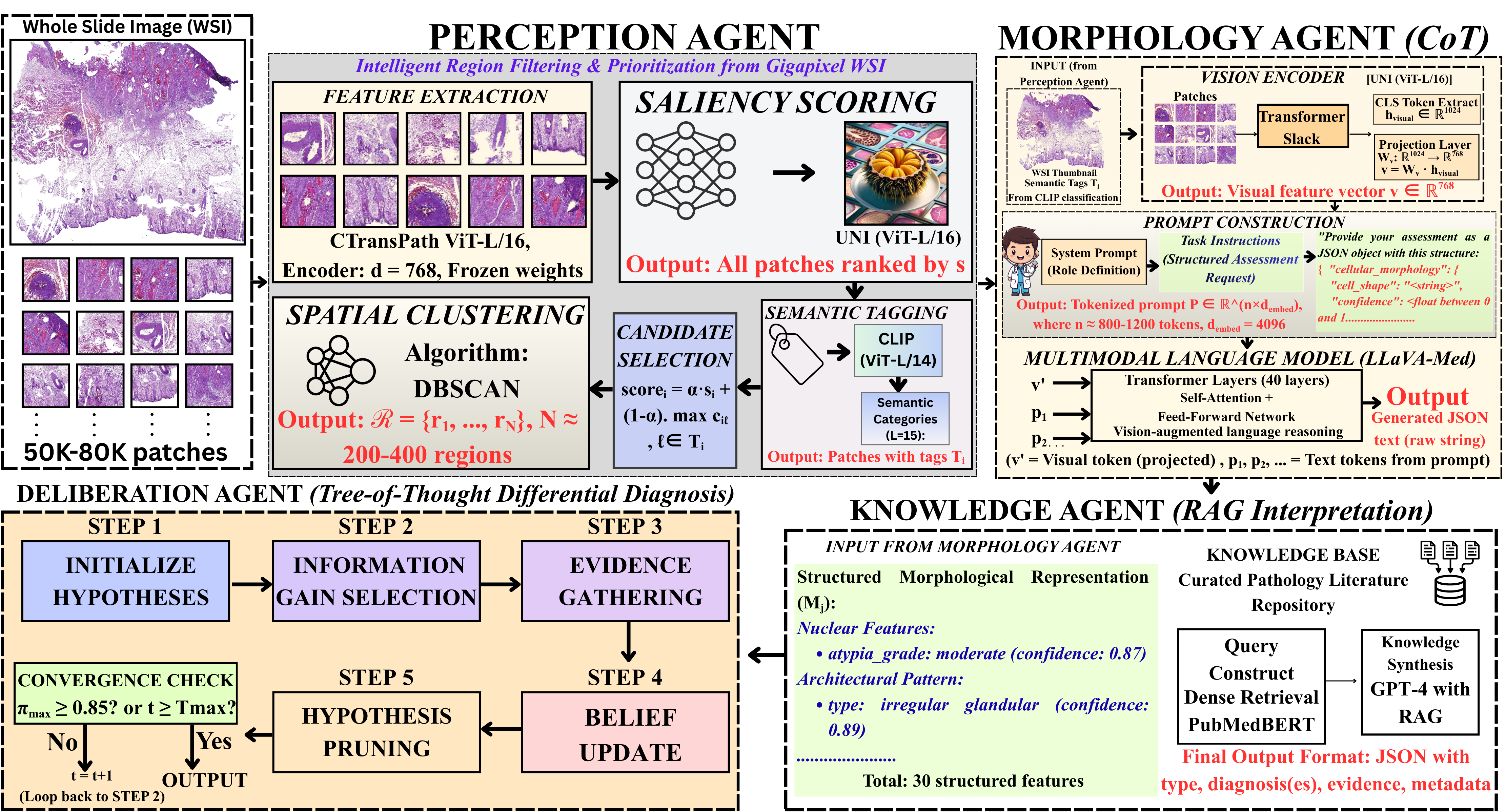
Developing a multi-agent deliberative framework that decomposes WSI-based cancer diagnosis into four specialized agents mirroring expert clinical reasoning. A Perception Agent reduces gigapixel slides to salient regions via learned filtering. A Morphology Agent interprets cellular features through Chain-of-Thought reasoning with calibrated confidence. A Knowledge Agent grounds interpretations in authoritative medical literature via retrieval-augmented generation. A Deliberation Agent performs final diagnosis through Tree-of-Thought reasoning — maintaining competing hypotheses, adaptively selecting evidence to maximize information gain, and revising beliefs via Bayesian updating until reaching a confident diagnosis, differential, or principled abstention.
SURE-Net
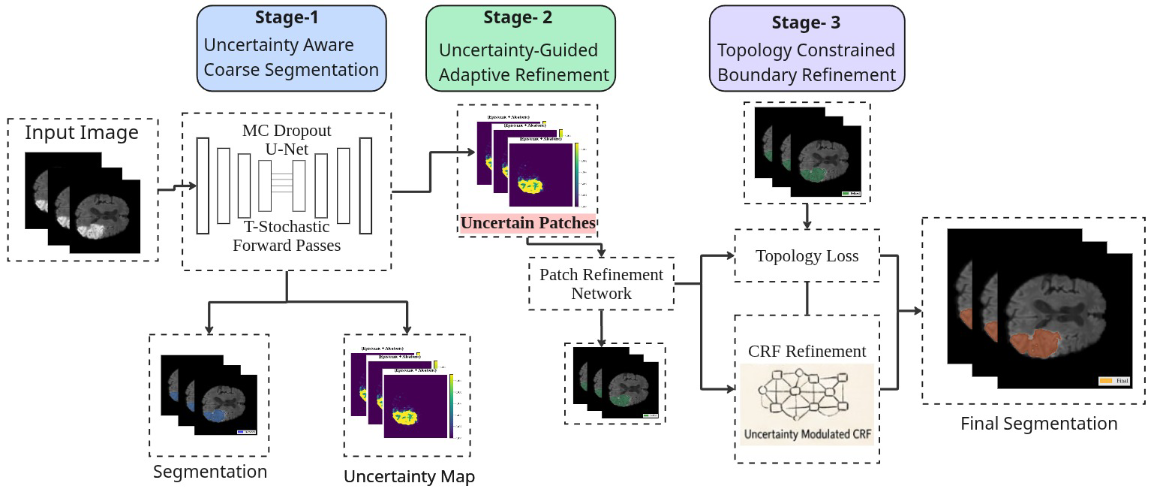
Uncertainty-Guided Adaptive Refinement for Brain Lesion Segmentation
Ashim Dhor, et al.
Manuscript in preparation
Developing a stroke lesion segmentation framework that explicitly models predictive uncertainty and leverages it as an active mechanism for adaptive refinement. SURE-Net integrates uncertainty-aware coarse segmentation, selective patch-based refinement guided by uncertainty maps, and topology-constrained boundary optimization into a unified pipeline. Rather than treating uncertainty as a passive byproduct, the framework uses it to allocate computational resources to ambiguous regions and enforce anatomical plausibility precisely where it is most needed — providing interpretable confidence estimates alongside segmentation outputs for clinical workflows.
Flag Counter